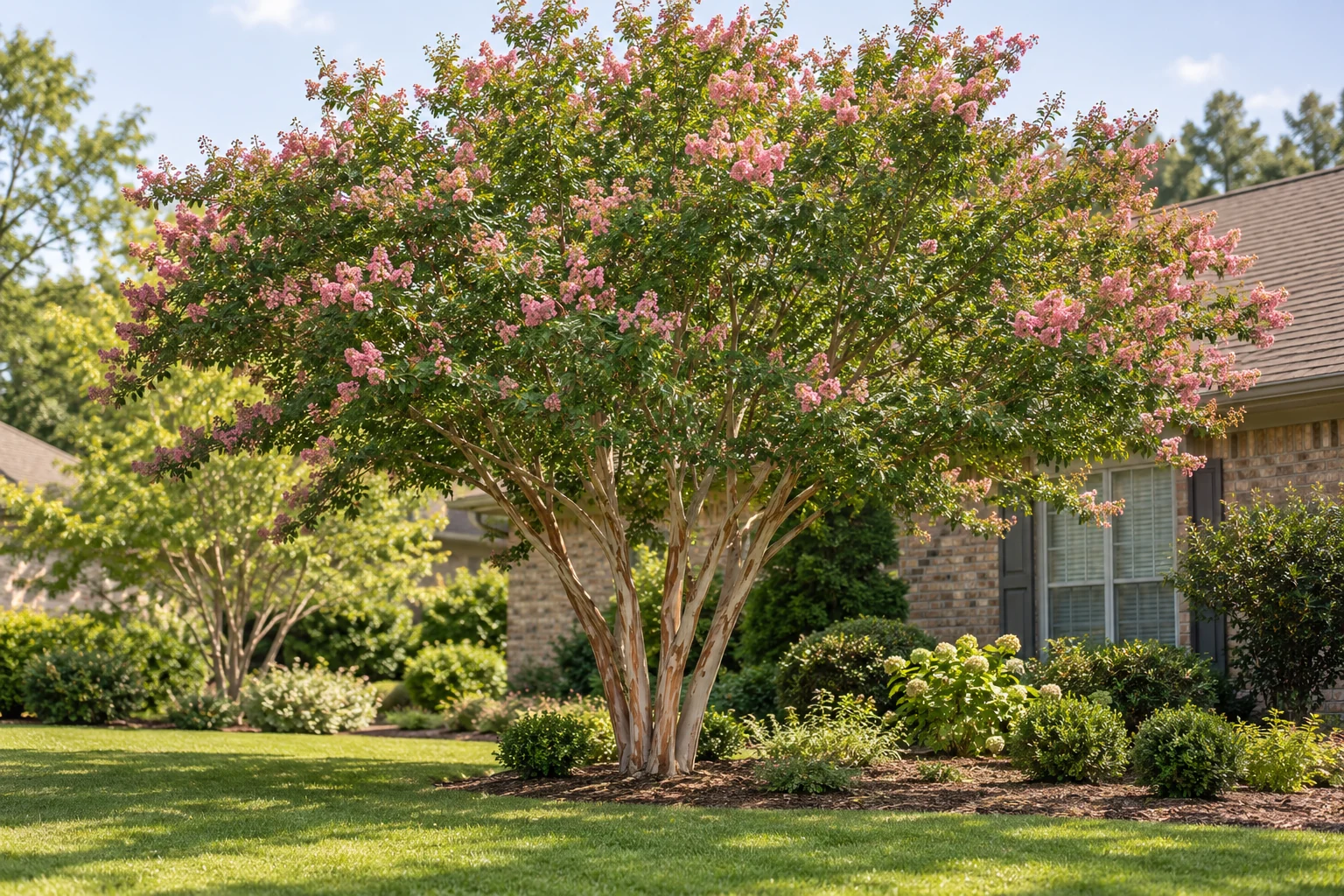
You know the look: a crape myrtle cut back to a row of thick, bare stubs, waiting to start over again.
It’s so common that it can look like the right way to care for the plant. There’s even a nickname for it: “crape murder.”
The name is dramatic. The takeaway is simple: your crape myrtle usually doesn’t need that annual haircut. For homeowners in Northwest Arkansas, better care starts with understanding the plant. Don’t pick a height and cut everything above it.
What is crape murder?
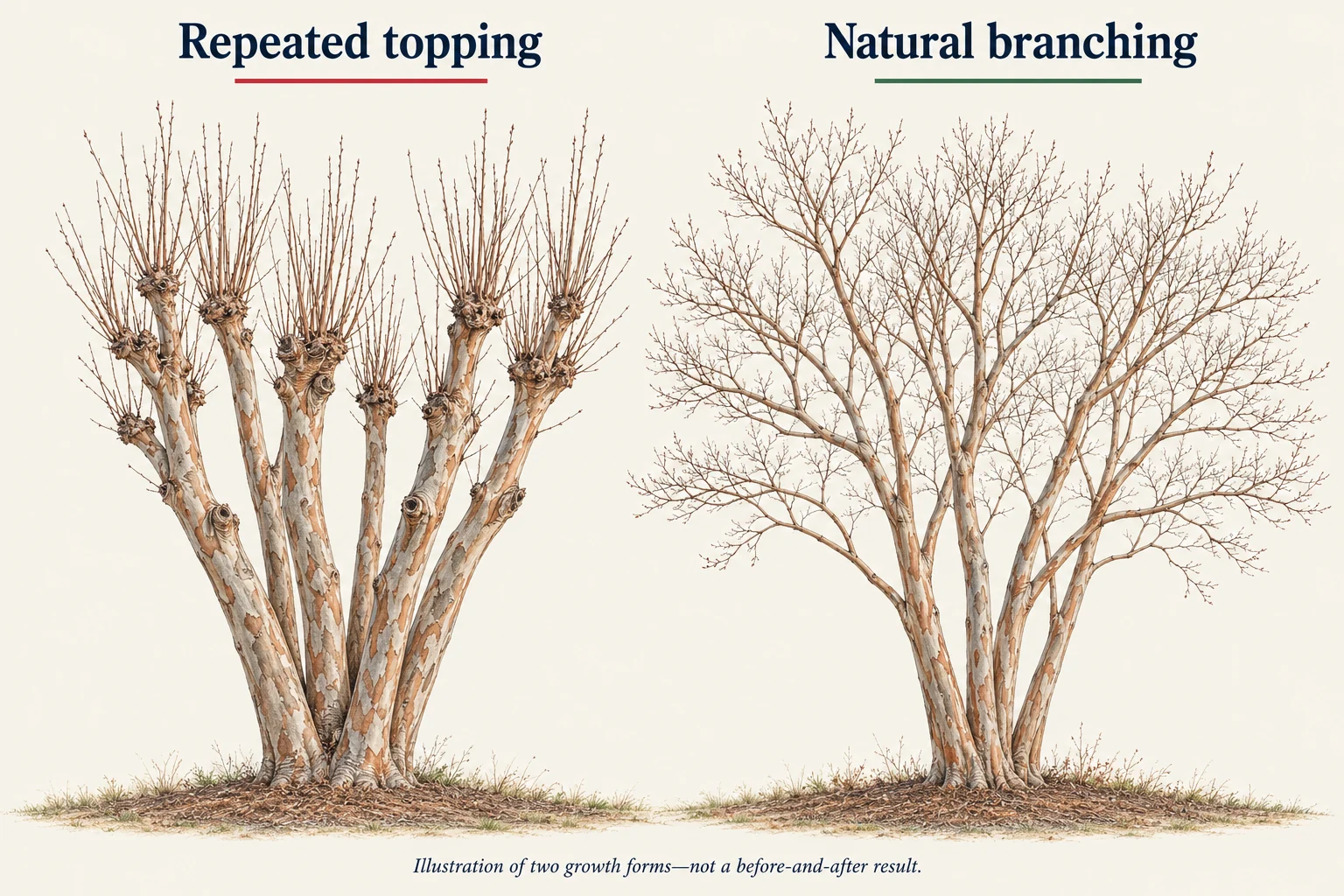
It’s the practice of topping a crape myrtle: cutting major branches back severely.
Repeated cuts can create knobby ends and crowded shoots. The new growth may carry flowers on thin stems that bend under the flowers’ weight. Topping can also increase susceptibility to insects and disease. University of Florida Extension
More cutting is not the same as better maintenance.
When should you prune in Northwest Arkansas?
Think late winter, before new growth begins, rather than fall cleanup time.
University of Arkansas Extension gives a general window of mid-February through mid-March. That’s a planning window, not an appointment every tree must keep. Well-established crape myrtles with good structure may not need pruning every year.
The U of A Extension also advises against fall pruning because leaving the canopy intact provides some protection against winter damage. As we head into winter, take photos and identify concerns rather than automatically reaching for the saw. Arkansas Extension’s pruning guidance
What should you do instead?
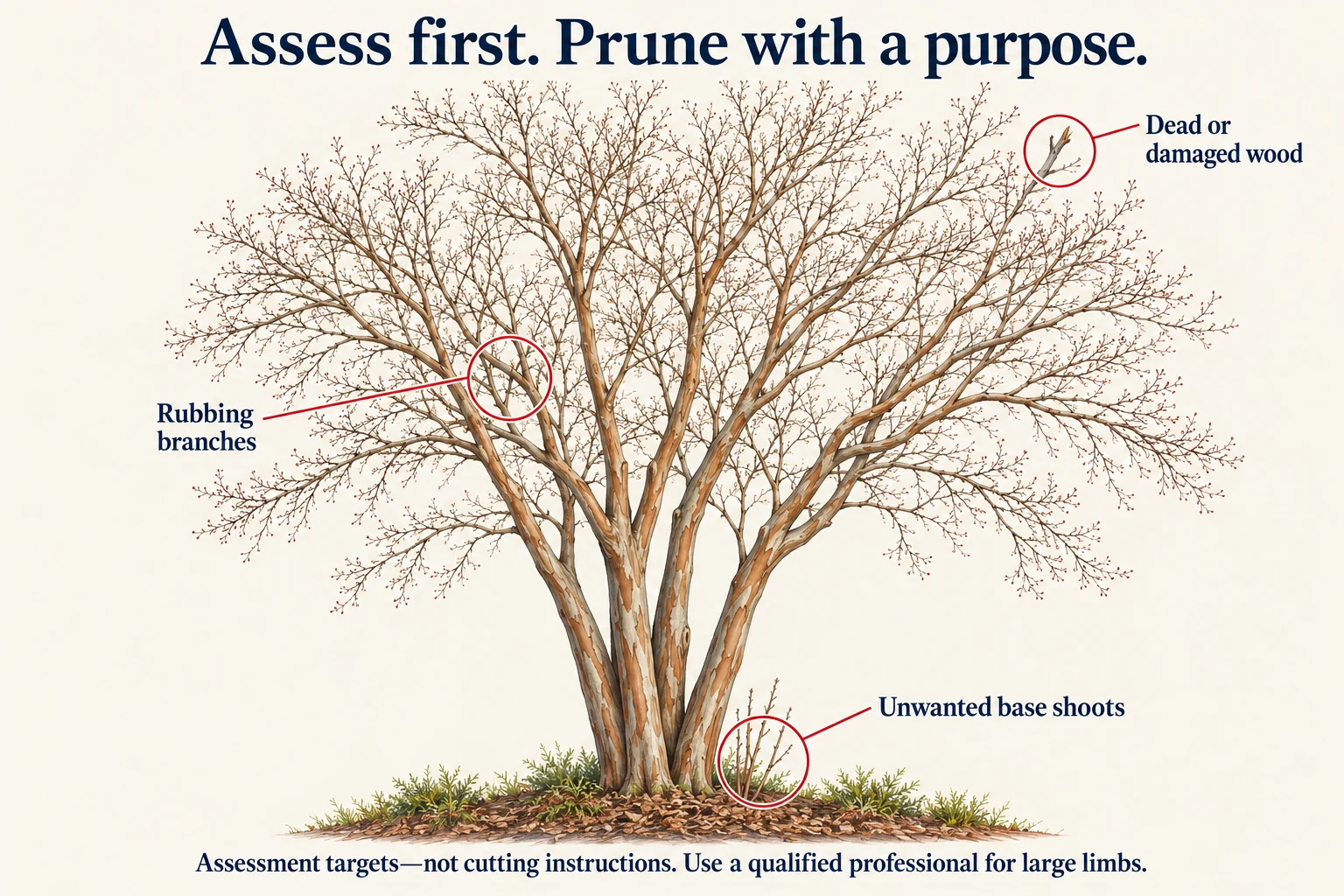
Start with a specific purpose. Is a branch rubbing another branch? Is growth blocking a walkway? Are unwanted sprouts crowding the base?
Selective pruning addresses those issues while preserving the plant’s natural shape. It doesn’t flatten the entire canopy. A dwarf, shrub-form variety also shouldn’t automatically be trained like a tall tree.
Crape myrtles bloom on new growth, but they can flower without annual pruning. There’s no need to climb up and remove every old seed head, either. For large limbs or tasks you can’t safely do from the ground, involve a qualified tree-care professional. Clemson Extension
What if yours has already been topped?
First, no guilt. You may have inherited the tree or followed advice that seemed reasonable.
Topped crape myrtles may benefit from gradual restructuring, but there isn’t a one-visit fix. The approach depends on the plant’s condition and remaining structure. Another severe cut won’t necessarily undo the earlier ones. Arkansas Extension’s recovery guidance
If a tree constantly outgrows its space, a smaller-maturing variety may be a better long-term choice than repeatedly forcing a large one beneath the roofline. Clemson Extension
Give your home field a better plan
Before your next cleanup, put crape myrtles on the “assess first” list, not the “cut everything back” list.
Need help prioritizing your yard’s seasonal care? Request a free property assessment from NWA Grounds Crew.